The diocese’s Micronesian community celebrates its faith and the bicentennial of Catholicism in Hawaii
By Celia K. Downes
Hawaii Catholic Herald
The Diocese of Honolulu’s Micronesian Catholic community hosted a vibrant and joyful celebration over two days last month, sharing their culture, traditions and strong legacy of Catholic faith as part of the broader commemoration of the bicentennial of Catholicism’s arrival in Hawaii.
The first part of the festivities, hosted by the Chuukese Catholic Community of Hawaii and other communities from the Federated States of Micronesia, took place Oct. 17 at Kapiolani Park in Waikiki, where various aspects of the Micronesian Catholic community were proudly on display.
Attendees could learn about the history of the Catholic Church in the Federated States of Micronesia, a country which comprises hundreds of islands in the western Pacific Ocean; observe traditional songs, dances and attire; and hear how the Micronesian community adapts and integrates into new societies.
Bishop Michael T.T. Castori, SJ, and Bishop Emeritus Larry Silva both visited the celebration, with Bishop Silva receiving a special honor from community leaders.
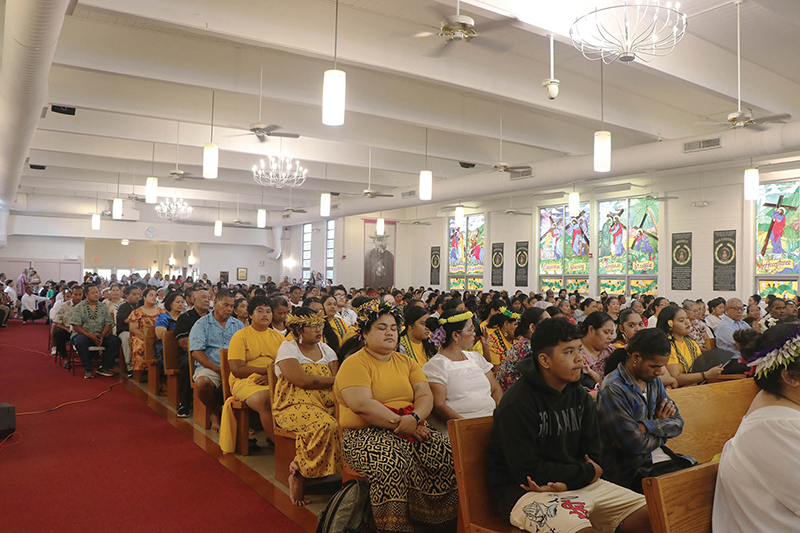
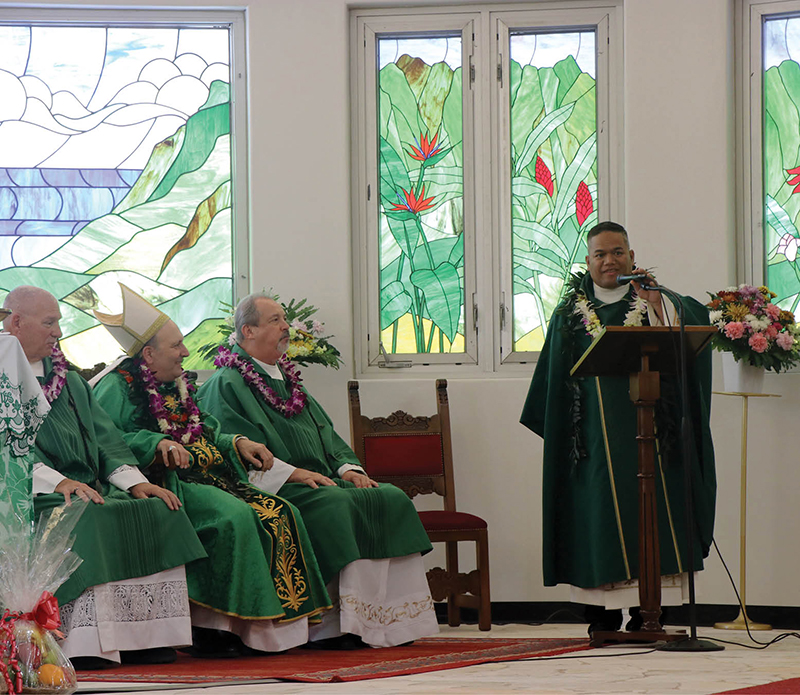
At Sunday Mass the next day, St. Elizabeth Church in Aiea overflowed with energy and people as the Micronesian Catholic community concluded its celebration. Bishop Castori celebrated the liturgy, assisted by Father Romple Emwalu, pastor of St. Michael Church in Waialua and chaplain for the Micronesian Catholic community.
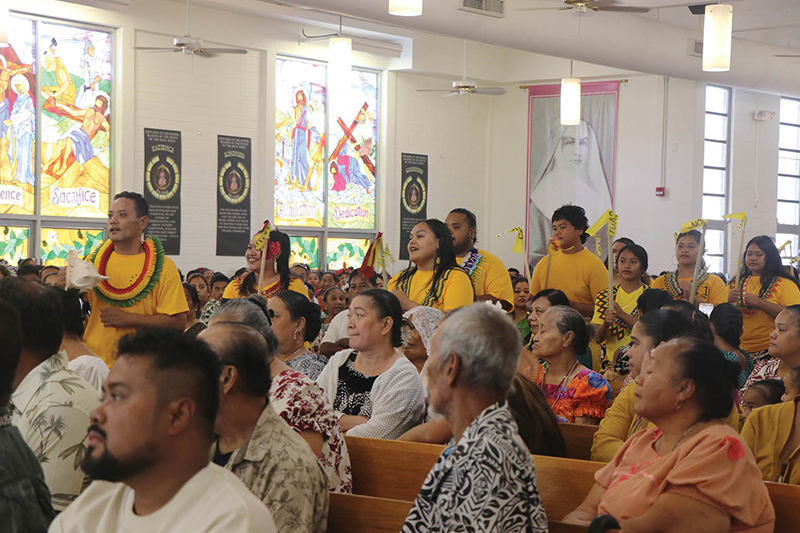
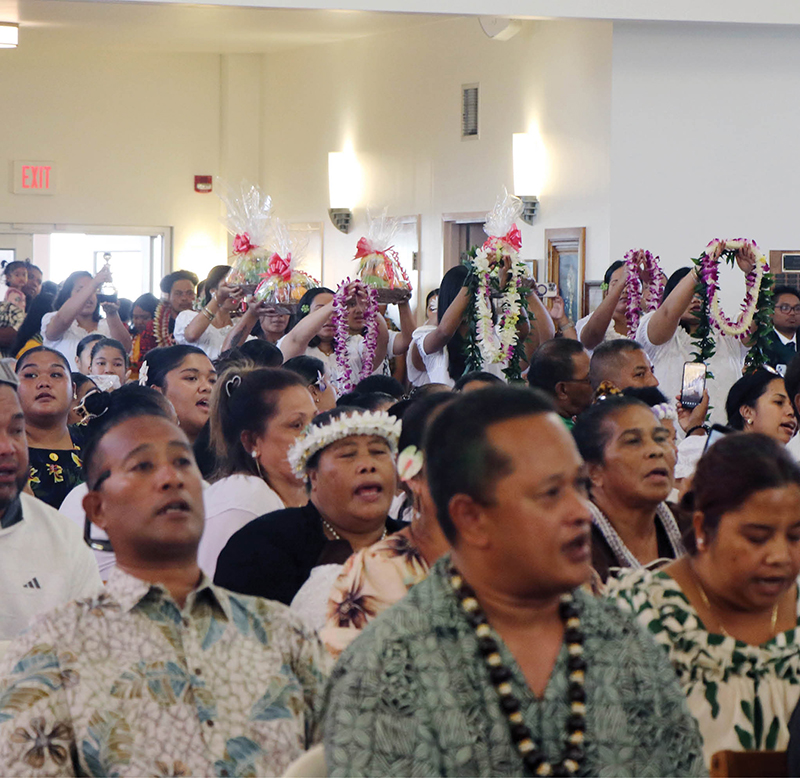
Among the highlights of the Mass were colorful, music-filled processions that brought the Word of God and the offertory to the altar. Father Emwalu explained that the processions, as well as the songs throughout the Mass, were presented by various communities from across the Chuuk region.
The communities represented included the Northwest Group, in particular the people of Pollap island in the region west of Chuuk Lagoon; Holy Cross, from Uman island; Sacred Heart, representing the islands of the Machew region; St. Anthony, from Tonoas island; Mortlocks; Nomusofo, representing islands in the western part of Chuuk Lagoon; and Weno, from the northern part of the lagoon.
According to Father Emwalu, the dances and songs are typically performed during opening ceremonies or when a significant event is to begin.
“They were later incorporated into liturgical celebrations back home as part of the inculturation of the Mass, specifically for the Bible procession,” he told the Hawaii Catholic Herald after the weekend celebration.
During his homily, Bishop Castori praised the Micronesian Catholic community for its contributions to the Church. He highlighted the strength of the community’s faith as well as how members have embraced the Church and folded it into their history and practices.
Bishop Castori recalled his own experience in Chuuk 40 years ago, when he was a lay member of the Jesuit Volunteer Corps working in Oceania. He paid a visit to Chuuk — Udot island in Chuuk Lagoon — and overheard an expression that has stayed with him ever since: “Ingeiti Ieisus Kristus, fein feino chok,” which means “Praised be Jesus Christ, forever and ever!”
Father Emwalu told the Herald that the Micronesian Catholic community’s festivities allowed other ethnic groups in the Diocese of Honolulu to witness and take part in the celebration, which helped “reveal the beauty and diversity of our shared Catholic faith.”
“Together, they show how the Church in Hawaii has grown and continues to welcome people of every race, language and culture,” he said.
“The Micronesian community’s participation in (the bicentennial) celebration offers a beautiful, living testimony to the Gospel,” Father Emwalu continued. “Through their faith, cultural traditions and spirit of service, they remind us that we are one family in Christ, called to share God’s love and nurture the faith entrusted to us.”