By Lisa Dahm
Hawaii Catholic Herald
Being present with someone who is ill — sitting at his or her bedside — can make all the difference between spiraling sickness and spiritual health for patients and their families.
Called the ministry of presence, this indispensable form of spiritual care is an essential component of hospital ministry. It acts as a salve that goes beyond physical healing of a person, according to Msgr. Gary Secor, vicar general for the Diocese of Honolulu.
“These critical moments, when someone is very sick or is dying, is a time when people are very vulnerable and want consolation and the compassion of the church,” Msgr. Secor said.
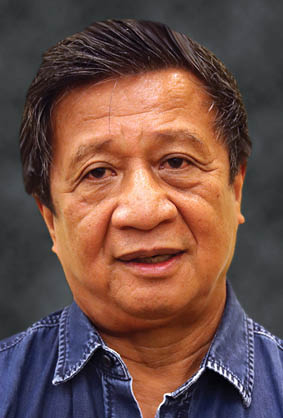
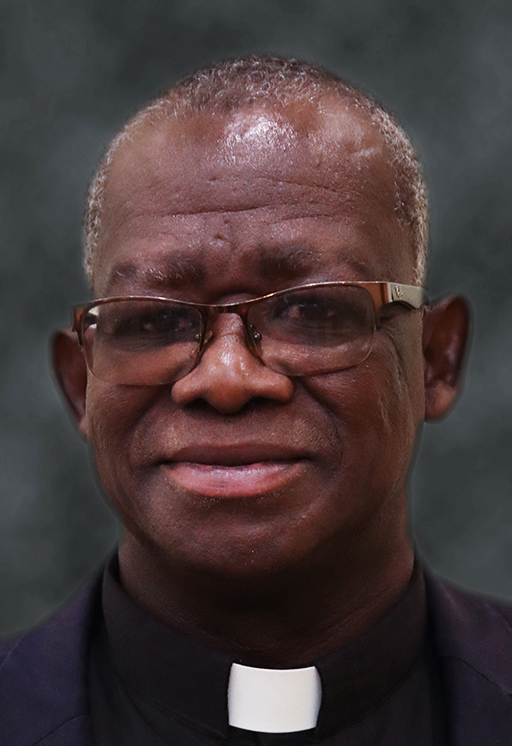
The Diocese of Honolulu’s Hospital Ministry office has two chaplains, Father Mario Raquepo and Father Octavius Moo, who visit Hawaii’s four largest medical centers — Straub, Queen’s, Kapiolani Medical Center for Women and Children, and Kaiser Permanente in Moanalua, all on Oahu.
Listening, connecting
For the chaplains, caring for the sick in the hospital, which is one of the corporal works of mercy, means taking turns being on call all day, every day, to serve those who need spiritual care.
The two priests split the hospital visit days between them. They can be called to perform last rites after having just returned home for the day, or they are awakened in the middle of the night.
“Sometimes when people are diagnosed with an illness, they are not feeling good,” Father Raquepo said. “Sometimes, they accept their circumstances and turn back to God. They are healed and are ready to face the consequences of their situation.
“We are there to help them in their spiritual connection with God.”
Father Raquepo has been ministering in the four hospitals since 2024. He had asked Bishop Larry Silva if he could participate in the Hospital Ministry when he retired.
“To listen to people, that is the main work,” Father Raquepo said. “When people express themselves (through spiritual restoration), it gives them a better chance to work through their sickness.”
The chaplains on staff at the individual hospitals typically supply Father Raquepo and Father Moo with a list of patients to visit. Volunteers also visit rooms and pray with patients, often bringing them the Eucharist if they request it.
On Sundays, Father Raquepo, or Father Moo in his absence, celebrates a 2 p.m. Mass at The Queen’s Medical Center in Honolulu.
“It is good that many, many hospitals now recognize the treatment of the patient for the things they cannot see — the emotional,” Father Raquepo said. “In the process of healing, they may not be healed physically, but there will be health (improvements) spiritually or emotionally.”
Faith in healing
For Father Moo, hospital ministry emphasizes the importance of faith, sacramental healing and the challenging opportunities of dealing with illness and death.
He began his second turn as a hospital chaplain for the Diocese of Honolulu this year after previously serving as administrator at Our Lady of Sorrows Church in Wahiawa.
He sees hospital ministry as a significant opportunity for evangelization, as it allows him to reconnect patients to their faith.
“When people are sick, they demonstrate a lot of faith in the healing effect of the sacrament of the sick,” Father Moo said. “When you go to anoint them, those who can speak respond to the prayers, and when you lay hands on them, they have a big sigh of relief.”
Father Moo also explained the difference between last rites and anointing of the sick — one is only administered when death is near, while the other applies to both the dying and the seriously ill.
Last rites is a group of sacraments given by a priest near the hour of a person’s death that includes reconciliation, anointing of the sick, the final Eucharist (“viaticum”) and an apostolic pardon, which a blessing that gives a plenary indulgence to a dying person.
The anointing of the sick, one of the sacraments of healing along with reconciliation, is for anyone who is facing a serious illness or a chronic condition; its purpose is to bring spiritual strength and healing. It can be done many times throughout a person’s illness.
Hospital ministry’s reach
Hospitals and nursing facilities on the neighbor islands and in the areas of Oahu not served by the four major medical centers are visited by the pastor in the jurisdiction of each site.
In addition to the 13 hospitals and medical centers on Oahu, there are six hospitals on Hawaii island, five hospitals on Maui, Molokai and Lanai, and three on Kauai.
According to Father William Kunisch, pastor of St. Theresa Church in Kihei and vicar forane for the Maui-Lanai Vicariate, priests rotate coverage for Maui Memorial Medical Center.
The number of calls will vary, and the hospital chaplain will typically reach out to the on-call priest a few times each week.
“Hospital ministry is important because it allows us to share in Jesus’ healing ministry,” Father Kunisch said.
“A large part of hospital ministry is evangelization, not only to the one who is ill, but to their wider family who is often present when we are called,” he continued. “Hopefully they will remember that the Church was there for them when they were afraid, suffering or grieving. It’s a very meaningful ministry and always worthy of our time, energy and resources.”
Many encounters in the hospital are heavy with emotion, Father Kunisch said.
“I always consider it a privilege to be with those who are near the end of life, and I can think of several times where I felt Christ’s presence in a powerful way when someone unburdened their conscience through sacramental confession or when they received the gift of peace after being anointed,” Father Kunisch said.
Father Kunisch also acknowledged parish volunteers who visit patients regularly, as well as hospital chaplains who are an “indispensable part in the patient’s spiritual care.”
“As priests, our ministry is primarily for the sacraments of confession and the anointing of the sick, and we are there for a brief time,” he said. “Parish volunteers, however, are there several times during the week as extraordinary ministers of holy Communion, and their frequent presence also reminds patients of the Lord’s closeness to them.”
Extensive training
Father Kunisch said many of the hospital chaplains in Hawaii are affiliated with Pacific Health Ministry, which provides continuing education and maintains the highest professional standards for its chaplains.
“Most (chaplains) are board-certified and have extensive training in trauma, palliative and end-of-life spiritual care and are well-integrated into the patient’s care team,” Father Kunisch said.
According to Msgr. Secor, seminarians receive comprehensive training in pastoral care. They must attend a mandatory clinical pastoral education (CPE) program and pass the CPE exam to fulfill their requirements for ordination in pastoral care.
During their training, seminarians spend time in a hospital program and visit both Catholic and non-Catholic patients.
“In that particular training, called verbatims, they recount what happens and get a group discussion about the visit,” Msgr. Secor said.
Father Kunisch said through verbatims, seminarians receive constructive feedback on their spiritual care from their supervisor and peers.
“Nothing was more helpful to me in my formation for ministry than CPE,” he said.
Msgr. Secor said that though he attends more funerals now, serving people in sickness and at the hour of their need is one he cherishes.
He recalled serving in hospital ministry at St. Anthony Church in Kailua when he was a transitional deacon. He was on call many nights to visit Castle Medical Center (now Adventist Health Castle), which is in the jurisdiction of the parish.
“I know it was very important to the family that someone with a collar showed up,” Msgr. Secor said. “Even though there was no anointing of the sick (since he was not yet a priest), they really felt closure. Sometimes a person wants a priest there to say a blessing — a lot of that is the ministry of presence.”