By Lisa Dahm
Hawaii Catholic Herald
When someone we love is experiencing severe chronic pain — whether at the end of life or through chronic illness or injury — there are options to relieve their suffering that are effective and bring meaning back to their everyday lives.
Palliative care is not just for end-of-life care but is also used in curative treatments to improve the quality of life of patients and their families at any stage of a serious or chronic illness, such as multiple sclerosis, Parkinson’s disease, kidney disease and stroke recovery.
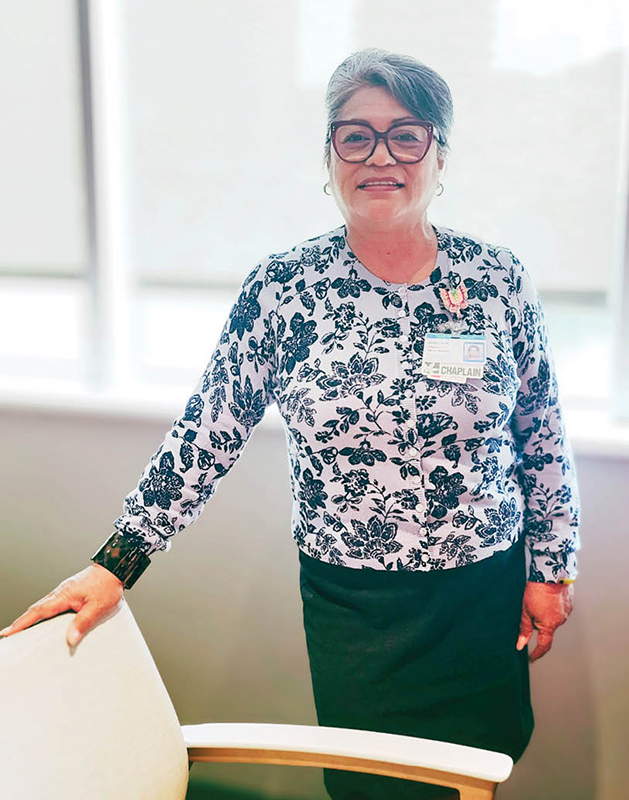
For Utufa’asili “Utu” McDermott, a pediatric chaplain at Kapiolani Medical Center for Women and Children in Honolulu, helping the young patients she meets to live their best lives starts with effective palliative care. When done well, this care makes a difference in their health for the rest of their lives.
“I think lot of patients or families, when they go into the hospital or to hospice, they really don’t know what palliative care is,” McDermott said.
She said palliative care looks at the needs of the whole person, which not only includes their physical pain but also their spiritual, emotional and even financial suffering.
“When you take care of that spiritual or emotional distress or mental pain, sometimes it alleviates some of that physical pain,” she added. “If you care for them holistically, I believe that you know they’re going to live a better life.”
Walking with patients and families
McDermott’s work in palliative care as a chaplain is done as part of a multidisciplinary team that also includes doctors, nurse practitioners and social workers. Team members focus on the needs of patients from their particular areas of expertise and develop a care plan that supports both patient and family beyond medical treatment.
One of her goals in helping patients through palliative care is keeping families together and supporting them all through the entire journey.
“A lot of them, you know, they’re worried — they’re uncertain,” she said. “They’re worried about their child’s diagnosis. They’re worried about finances and how they are going to make it work. They’re worried about their children at home and how they going to care for them with their (sick) children here.”
McDermott said she will often take these concerns back to the palliative care team.
“I know that there are conversations that the patient and the family have with the chaplain that they don’t say to the team or to the doctor,” she said. “And so that’s what palliative care is about. We journey with the patient in their difficulty, and we walk with them in their healing. It’s about the quality of life and the dignity of the human being.”
Sometimes improving a patient’s life situation means bringing them from a three on a scale from one to 10 to a four or five, according to McDermott.
She said in order to find out how to best help her patients, she first tries to find out what they loved before their illness or condition.
McDermott once had a 15-year-old patient who spent all of her time surfing before her illness, which paralyzed her legs.
“She was a surfer girl, you know, and that was also something she lost,” McDermott said. “It gave her meaning. It gave her joy, and she wanted to compete.”
After much thought, McDermott brought the patient sketchbooks, paints and pencils.
“I told her, I want you to draw your story. I think it’s so colorful,” McDermott said. “She started doing that, and then before she left (the hospital), she drew me this big wave; it was blue and green, and then there was a little person sticking out with her surfboard. It was her, and she signed it.”
McDermott said the patient was able to heal by doing a life review through artwork.
“We try to help them … to try and think about how they can live their best life right now in the same situation that they’re in,” she said. “That’s what palliative care does.”
“I always see it as a prayer when I go in and talk to them because I think to myself that every single word I say to them, I would like to think they’re the words that God said to me to speak to them, so that it can help them to get better,” McDermott said.
Expert advice
McDermott, who attends Our Lady of Perpetual Help Church in Ewa Beach and St. Anthony Church in Kalihi, earned a master’s degree in pastoral theology from Chaminade University of Honolulu. Her pastoral field training was done at St. Francis Healthcare System of Hawaii Hospice, plus two residency years at The Queen’s Medical Center. She has been in her position at Kapiolani Medical Center through Pacific Healthcare Ministry for six years.
She recently held a workshop through the diocesan Respect Life Office on palliative care. In it, she described some of the more technical issues patients receiving medical treatment and their families who are Catholic may face.
The workshop was so successful that Val and Deacon Gary Streff, co-directors of the Respect Life Office, asked her to hold another one on Oct. 17 at St. Stephen Church in Honolulu.
The Catholic Church also provides documents that people can turn to in times of illness and pain, when hard decisions need to be made quickly and emotions might be running high. Professionals often turn to “Ethical and Religious Directives for Catholic Health Care Services,” composed by the Committee on Doctrine of the U.S. Conference of Catholic Bishops.
Palliative care and hospice
At St. Francis Healthcare System of Hawaii Hospice, the goal is to walk with patients, providing dignity, love and help to bring meaning in the final days of their lives.
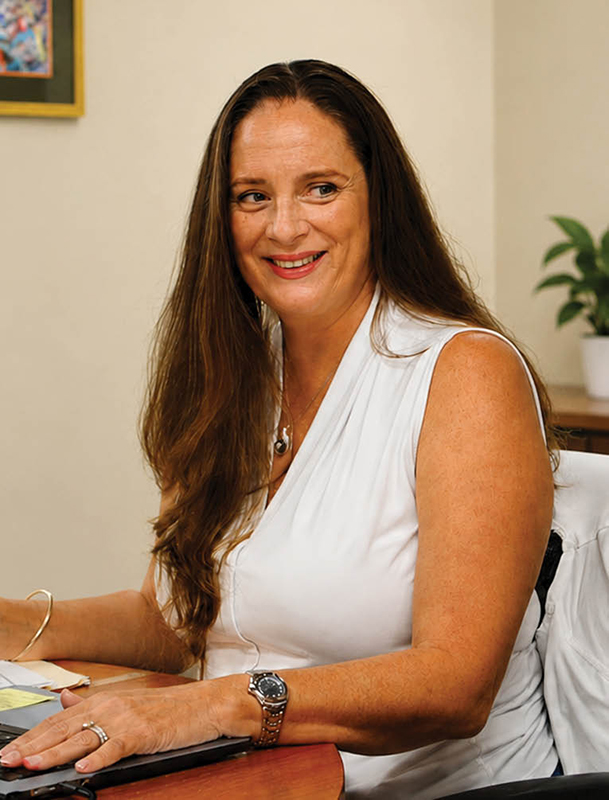
Petra Ranches, a nurse practitioner with St. Francis Hospice, defined palliative care as a multifocal, supportive service that begins at any stage of serious illness to manage symptoms and provide emotional, spiritual and physical support.
At St. Francis Hospice, the multidisciplinary team typically includes a doctor or medical director, nurse practitioner, nurse case manager, social worker, spiritual care provider, and sometimes volunteers or home health assistants.
“It’s a really important approach that we’re all putting our heads together to find out what’s important to that patient and how we can meet their needs,” Ranches said. “What I’ve heard from patients’ families is that they really value all of the support. Each person is different. Everybody is given their own strength in some way.”
Ranches said starting a conversation on palliative care early allows families to better understand options and honor the patient’s wishes before a crisis occurs. The team addresses comfort measures, symptom management, and whole patient and family support.
“(We help them to) live the best life that they could live in whatever time they have,” Ranches said. “It’s not just a good death. It’s really a good day until I pass, or until I start feeling better. It’s not just about those few days at the end of life—It’s really about that journey.”
To attend the next palliative care workshop on Oct. 17, contact the Streffs in the Respect Life Office at (808) 203-6722.