Viriditas2: Soul Greening
Interviewed by Sister Malia Dominica Wong, OP
Hawaii Catholic Herald
People often ask me what it is like to live at Kalaupapa. I usually smile because it is difficult to put into words. It is not simply a place where I live or serve. It is a place where I experience God’s presence every day.
Nature itself speaks to me. The wind, the rain, the shifting clouds, and the shadows stretching across the valley all remind me that God is near. Watching a rainbow appear after a shower, finding a monk seal with her pup resting along the shore, seeing the deer wander quietly through the settlement, or simply feeling the warmth of winter here — these moments draw me into prayer. Like St. Francis of Assisi, I find that all of creation proclaims the goodness of God.
But it is not only nature that nourishes my faith. The people who come to Kalaupapa are usually pilgrims rather than tourists. They arrive seeking something deeper.
Many share stories of how Sts. Damien and Marianne Cope, or Joseph Dutton, have touched their lives. As they tell these stories, I find my own faith strengthened. Their gratitude reminds me that God’s grace continues to work through these holy witnesses.
Looking back, I realize I have always felt held in God’s loving embrace. Even as a child, I had a quiet sense that I was loved. That awareness has sustained me throughout my years in education and now in this ministry of welcome and accompaniment at Kalaupapa.
This peninsula carries a painful history. The people who were sent here had Hansen’s disease, but they also endured another kind of suffering. They were separated from their families, taken from their homes, and often treated as though they were criminals instead of beloved children of God. They arrived carrying not only illness but grief, loneliness and fear.
Yet something remarkable happened here.
The ancient Hawaiians, the Protestant ministers, Father Damien, the Sacred Hearts brothers and priests, the Franciscan Sisters, and so many others chose compassion over fear. They did not define people by their disease. They welcomed them with dignity, respect and love. Little by little, what had begun as a place of exile became a place of belonging.
One author described Kalaupapa as a prison that became a paradise. I have never forgotten those words. Paradise did not come because suffering disappeared. It came because people discovered ohana.
They fell in love, married, built friendships, shared their faith, laughed together and cared for one another. Their bodies often remained broken, but their spirits were healed.
We live in a time when many people struggle with loneliness, anxiety and despair. Kalaupapa reminds me that the human spirit is stronger than suffering when it is rooted in love. We are created in the image and likeness of God, and no hardship can erase that dignity.
Every day, whether I am watching the wind move across the cliffs or listening to a pilgrim share a story of faith, I am reminded that God’s love is always present. Here at Kalaupapa, I have learned that even the deepest wounds can become places where hope quietly takes root.
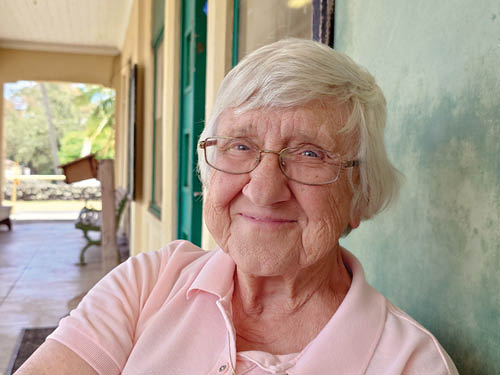
Sister Barbara Jean Wajda is a Sister of St. Francis of the Neumann Communities serving in Kalaupapa. She is 65 years professed.