By Celia K. Downes
Hawaii Catholic Herald
Though there was no way to know at the time, Bishop Michael T.T. Castori, SJ’s childhood laid the groundwork for his current ministry as the sixth bishop of the Diocese of Honolulu.
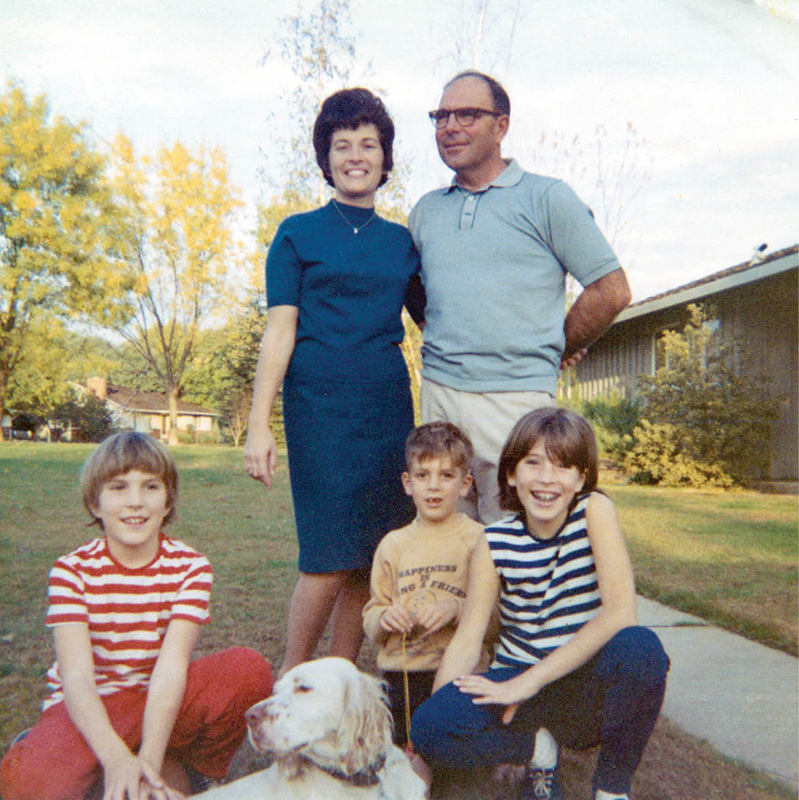
When he was growing up in Carmichael, California, the youngest of three children and only boy born to Michael and Lucille Castori, the family would take long summer vacations in which they went first to the mountains, then down to the ocean.
This intensive time together reinforced their love and connection to each other, Bishop Castori told the Hawaii Catholic Herald in an interview, and helped him experience God’s love through his family.
And, as he recounted during a May 6 press conference introducing him to isle faithful, “without my knowing, of course, at the time … the very combination of ocean and mountains would define the topography of this beautiful diocese, which now becomes my home.”
Indeed, while the role of bishop was nowhere on his radar as he discerned and then pursued a call to the priesthood with the Society of Jesus (also known as the Jesuits), Bishop Castori’s ministry since he entered the Jesuits’ novitiate in New York nearly four decades ago has shown his love for Pacific island peoples and cultures — making him perhaps the best possible fit to shepherd Hawaii’s unique ethnic makeup.
“Michael has worked in pastoral settings for years in Guam, Fiji, Micronesia, Tonga, Australia and elsewhere in the Pacific. He knows very well the culture and history and faith of the Pacific region,” said David DeCosse, who has known Bishop Castori since their freshman year at Harvard University in 1978.
DeCosse, now the director of religious and Catholic ethics at the Markkula Center for Applied Ethics at Santa Clara University in California, added that Bishop Castori also “knows very well the culture and history and faith of the United States.”
“I think Michael as bishop will be able to call on his years of experience to be a leader ready to foster the spiritual richness of the people of God in Hawaii; to walk with them amid their culture and history; and to serve them with the joy and hope and endurance of the love of Christ,” he said.
‘Your will be done’
Bishop Castori embraced the Holy Father’s call to lead the faithful in Hawaii, but not right away.
As he recounted in the May 6 press conference, he was in the garage of his Jesuit community at Seattle University when his phone rang with a question: Would he be open to being appointed by Pope Leo XIV to be the sixth bishop of the Diocese of Honolulu?
“My initial reaction was shock, followed by the awareness of my unworthiness,” he said. “My inclination was to ask to be removed from consideration.”
Bishop Castori asked for and was granted two days to pray over his response — at this point, he knew only that he was being considered for the Honolulu episcopacy.
He said during that time, he found solace in two prayers: “Your will be done” and St. Ignatius Loyola’s Suscipe prayer, which begins with “Take, Lord, and receive all my liberty.”
“I came to believe that in light of my life and what was being asked that if the Holy Father made that appointment, that that was a call that was coming from God,” Bishop Castori told the Herald.
After two days, Bishop Castori sent his response to the Jesuits’ father general in Rome, which was then relayed to the Holy See. “And then the (papal nuncio, Archbishop Gabriele Caccia) called me after that,” he said.
(Because Bishop Castori is a member of a religious order, there were more steps involved in his appointment. While Pope Leo was the one who made the final decision, his interactions with then-Father Castori were relayed through the head of the Society of Jesus, known as the superior general or father general, and then through the provincial of the Jesuits’ U.S. West Province.)
“And so I’m here with you today, still in almost as much shock as I was in the garage when I received that call, but also joyful,” Bishop Castori said May 6.
His arrival in Hawaii marks a full-circle moment from the very start of his discernment of his priestly vocation, when he was a lay worker with the Jesuit Volunteer Corps following his graduation from Harvard.
In 1985, he and other volunteers stopped in Honolulu on their way to Guam for a few days of orientation.
“I was quickly taken in by the rich beauty of this state and the rich diversity and warm hospitality of its people,” Bishop Castori said at the press conference. “In the 41 years that have passed since I first touched down here, in a sense, my soul has never left the Pacific.”
Decades in Oceania
Bishop Castori worked in Guam for two years, teaching and assisting at a seminary.
It was during a retreat in Saipan in 1986 — his first real introduction to the Spiritual Exercises of St. Ignatius Loyola, founder of the Society of Jesus — when he knew he would pursue his religious vocation.
He entered the Jesuits’ New York Province in 1987 and was ordained to the priesthood 11 years later. (He later transferred to the order’s U.S. West Province.)
As part of his formation, he taught in Fiji at the Pacific Regional Seminary, which educates future priests from a wide range of religious orders and dioceses in Oceania. In addition to his years in Guam and Fiji, he also spent a substantial amount of time in Tonga, Micronesia and other Pacific nations.
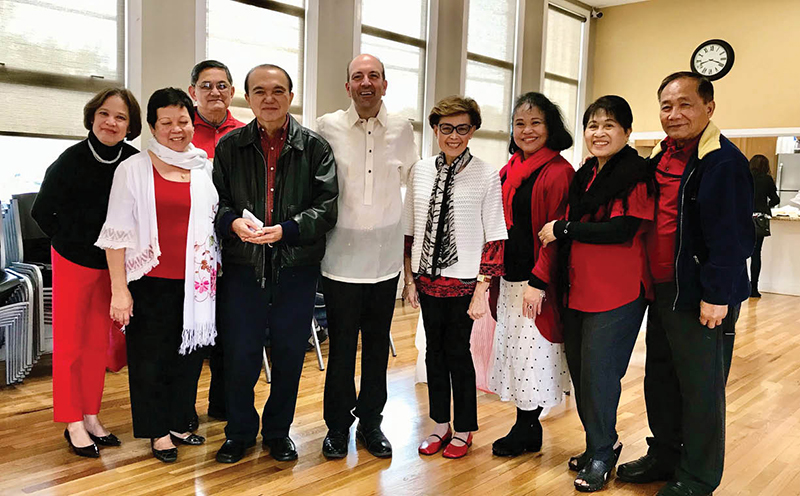
And when he returned to the U.S. mainland, now in California versus back on the East Coast, he was able to continue his pastoral ministry with people from the South Pacific through the Tongan Catholic communities of Northern California and his time as associate pastor at All Saints Church, a richly diverse parish in Hayward, California.
Bishop Castori told the Herald that his visits back to Hawaii as bishop-elect felt familiar to him even though decades had passed since his first stopover here — he was reminded of the Fiji seminary’s unique makeup of many distinct places that still share commonalities.
“I am grateful for the years that I have had, the experience I have had of life and ministry in the Pacific and in Oceania,” he said. “I have never felt at home so quickly as I did when coming to Hawaii.”
He highlighted the notion of church and community as family as well as the spirit of aloha — “which is really a moral notion, it isn’t simply (a) greeting” — as “both new and familiar to me.”
“I feel very blessed to be able to live in that environment,” he said.
Lifelong love of God
The closeness of family and a deep love of God have filled Bishop Castori’s life for as long as he can remember.
The vacations his family took when he was a child were just one highlight in an upbringing filled with affection and care, Bishop Castori told the Herald.
His father was Catholic and his mother was Jewish, and the family celebrated both faiths when he was growing up.
Ultimately, Bishop Castori said, there was “a very deep sense of love and devotion to God above and beyond all things.”
A love of learning also filled the Castori home, where both parents were teachers (his father a principal) and all three children became educators as well.
Bishop Castori said he did not consider a religious vocation as a teenager, but “by senior year (at Jesuit High School in Sacramento) something was happening within me, (though) I couldn’t name it at the time.”
His time in high school did get him “really interested in Scriptures and the Bible and reading them and learning them … I felt myself being touched more and more by the Scriptures and presence of God.”
This early interest led to expertise in both areas as well as a “very deep devotion to Catholic education,” Bishop Castori added.
“From the first retreat that I made, I just felt the gift of God’s presence in reading the word,” he told the Herald. “I do believe that God speaks directly to us through the word of God.”
During Bishop Castori’s junior year at Harvard, a “very Scripture-based” retreat in New York with friends led to his first real recognition of a call to priesthood.
Outlook for Hawaii
Bishop Castori’s episcopal motto is “E hiki mai kou aupuni” — “Thy kingdom come,” taken from the Our Father in olelo Hawaii.
“I chose that because I believe that in building God’s kingdom, we are essentially ushering the values and ultimately the love and mercy of God in our society, in our human family,” he told the Herald — “what Pope Leo just called our ‘magnificent humanity’ (in his encyclical ‘Magnifica Humanitas’).”
He noted that he has observed “tremendous” energy, skill and devotion in the church, “and I would love to be able to support and build on that energy and devotion and skill by highlighting the gospel values of God’s kingdom in word and sacrament. … so that when people look at us as Catholics and look at our diocese, they say ‘Oh, this is from God.’”
“We are not perfect, but we are doing all that we can to build his kingdom here in Hawaii,” Bishop Castori said.
To that end, he said he has had “wonderful” meetings with groups within the diocese, from priests to educators to catechists to parishioners.
“There is a religious awakening right now in our society, in our culture, and we can’t let this moment pass,” he said.
“People are hungry for deeper connection to God and each other. The ministries our diocese has are a way to open the door and let people come more ardently into the values of the kingdom and to be part of that religious awakening.”
DeCosse, Bishop Castori’s friend dating to their days at Harvard, said that Bishop Castori “has the heart of a pastor. … He is just and unafraid to say what has to be said.”
“But he is more than anything a pastor with a heart that has been dedicated especially for decades to the people of God of the Pacific.”
Top: The Castori family at home in Carmichael, California: dad Michael, mom Lucille, sisters JoAnn and Pamela, young Michael and the family pet, Princess; above: Then-Father Michael T.T. Castori, SJ, with parishioners at All Saints Church in Hayward, California, on the feast of Santo Nino in 2018. (Photos courtesy Bishop Michael T.T. Castori, SJ)