By Lisa Dahm
Hawaii Catholic Herald
A one-night count of people experiencing homelessness on Hawaii island, Maui and Kauai in January showed that efforts to house families and individuals are gradually having a positive impact, thanks to the efforts of community organizations like Hope Services Hawaii.
Bridging the Gap, a coalition of agencies dedicated to ending homelessness on the neighbor islands, presented the results of the 2026 Homeless Point in Time Count at a press conference May 13 at the West Hawaii Civic Center in Kailua-Kona.
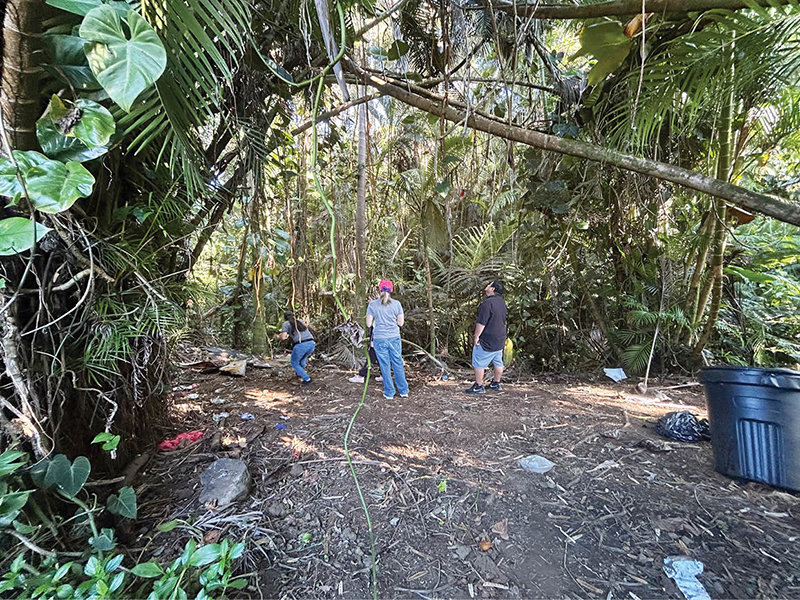
The annual census, also called the PIT Count, is a federally mandated tally that takes several days to complete — this year the night of Jan. 25 was considered the anchor date. Outreach workers and volunteers went into the community to identify individuals who were sleeping in areas not fit for habitation, such as on the street or in vehicles.
Hope Services Hawaii, an affiliate nonprofit organization of the Diocese of Honolulu that has operated as its own corporation since 2010, works to make homelessness on Hawaii island rare, brief and nonrecurring, according to its website.
It offers services on multiple levels, including housing for kupuna, people who are houseless and experiencing medical emergencies, and recovery and housing for families and veterans. There are also options for people to receive immediate assistance.
Hope Services Hawaii was the lead agency on Hawaii island for the PIT Count.
Brandee Menino, executive director of Hope Services Hawaii and chair of Bridging the Gap, said she was “pleasantly surprised” that concerted efforts to get more families sheltered and housed resulted in a 91% reduction in the number of unsheltered families since 2018, and a 20% drop in unsheltered families from 2024 to this year.
“Although we have limited resources, our agencies had decided together that we would prioritize getting families with children off the street, and the data doesn’t lie,” Menino told the Hawaii Catholic Herald. “It worked.”
The overall decrease in families experiencing homelessness on Hawaii island since 2018 was 62% for both unsheltered (sleeping on the streets, in cars, in parks and other locations) and sheltered (staying in transitional housing or in emergency shelters) families.
“One of the reasons we did this was that children who experience homelessness are much more likely to become homeless as adults,” Menino said. “Therefore, if we can prevent or shorten their homelessness as children, we drastically improve their chances of being successful, healthy, stably housed adults.”
Contributing factors
Rent continues to be one of the primary factors that affect an individual or family’s ability to find and remain in housing.
According to Hope Services Hawaii, the U.S. Government Accountability Office found that median rent increases of $100 a month correlated with a 9% increase in homelessness on the neighbor islands. Data from the Hawaii Housing Dashboard, produced by the University of Hawaii Economic Research Organization, shows that rent prices have increased by 51% on Hawaii island, 45% on Maui and 50% on Kauai since 2019.
According to Menino, the average income of a Hope Services Hawaii household client is $980 per month. A household is any group of people who live together as a unit and can consist of one person, a large family, a group of adults or other configurations.
“The high cost of rent is a major barrier to both finding housing and staying housed, and that’s why people stay in our shelters so long,” Menino said. Another challenge she cited is keeping track of important documents: “Many clients have their documents lost, destroyed or stolen while living on the street, so we frequently assist with document replacement.”
Family conflict is also a big contributor to the struggle to find housing. In 2025, 30% of Hope Services Hawaii clients were domestic violence survivors and 9% were actively fleeing domestic violence.
The agency partners with other nonprofit organizations, such as He Ho‘omaka Hou Ana O Puna, which provides woman-focused services such as counseling, peer mentorship, and Western and culturally rooted healing practices.
“In order to set our participants up for success, we connect them to community resources and organizations that offer support for wherever they are in their journey to overcoming homelessness,” Menino said.
Menino said the decrease in Hawaii island homelessness appears to reflect a stronger, more coordinated housing response.
“The data shows real progress, especially for families, but the need has not gone away,” she said.
Maui, on the other hand, showed mostly flat progress in its efforts to combat homelessness. While overall homelessness remained about the same from 2024 to 2026, the rate of unsheltered homelessness increased by 40% over the two-year period. Sheltered homelessness fell by 31%.
In a May 13 media release issued by Bridging the Gap, Ashley Kelly, chair proxy of Maui Homeless Alliance, noted that housing placement has become more competitive in the wake of the devastating 2023 wildfires.
“Maui’s path forward requires sustained investment in affordable housing, rental assistance, outreach, and core services so that today’s efforts can become long-term stability for our community,” Kelly said in the media release.
Kauai’s overall homelessness fell by 1% from 2024 to this year; unsheltered homelessness fell by 5% and sheltered homelessness rose by 28%.
“The increase in the sheltered count suggests that more individuals and families are successfully connecting to shelters, housing resources, and supportive services,” said Makana Kamibayashi, chair of the Kauai Community Alliance, in the media release.
Upcoming projects
In the next few years, Hope Services Hawaii plans to open several projects that will provide safe, affordable housing for families, kupuna, veterans, and people with disabilities.
According to Kristen Alice, director of community relationships, the organization last year acquired the Kani Lea apartment building on Kalawa Street in downtown Kailua-Kona for people with low or extremely low incomes who are experiencing homelessness.
The building is currently undergoing renovations with an anticipated opening sometime this year.
Two years ago Hope Services Hawaii also purchased 23 acres in Mountain View, which is located on the east side of Hawaii island in the Puna district. There, the agency is developing Mountain View Supportive Housing, which will provide a community of long-term, affordable rental homes for neighbors who have overcome homelessness and also have disabilities or health-related needs.
Hope Services Hawaii is also moving into the third phase of housing in the Sacred Heart Community in Pahoa, which will provide permanent housing for families.
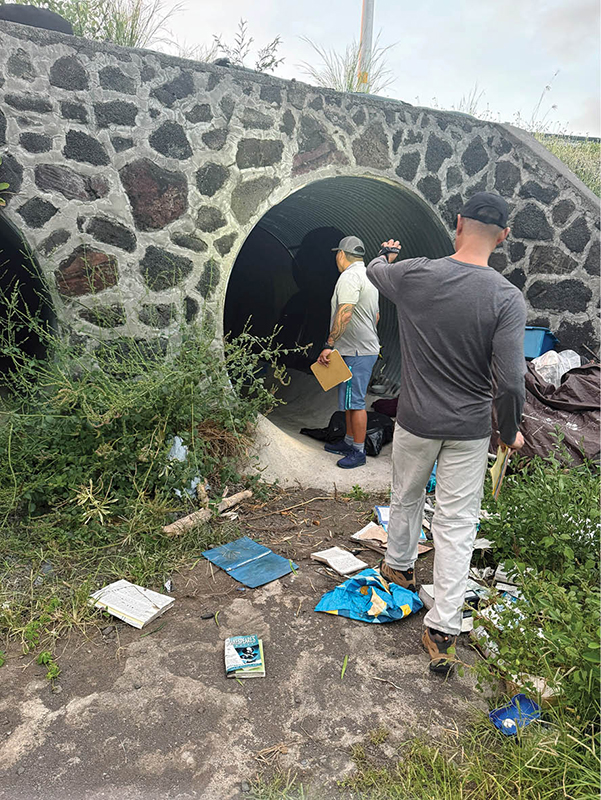
At top and above: Volunteers took part in the Homeless Point in Time Count on Hawaii island earlier this year, looking for people to interview. (Photos courtesy Hope Services Hawaii)