View from the pew
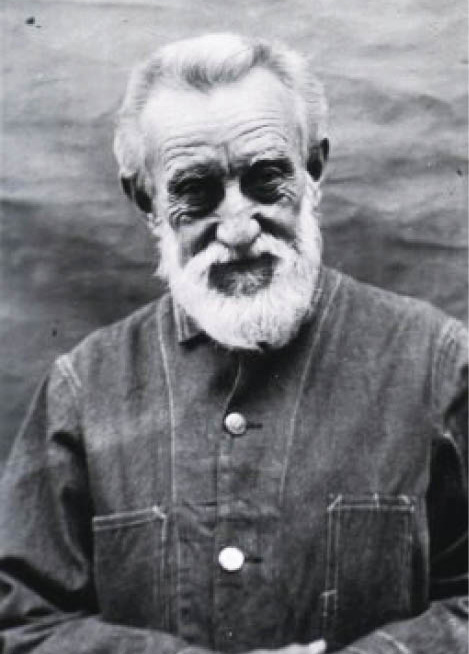
On April 27, the first state observance of Brother Joseph Dutton Day, I celebrated by calling a man who has been immersed in the story of his life and has shared it for years.
But I think many people, even Catholics, probably said, “Who da guy?” when Gov. Josh Green on April 23 announced he would sign a Senate bill creating the observance.
As usual, the governor was surrounded by a backup crowd during the ceremony at the state Capitol. in this case, members of the Joseph Dutton Guild and Diocese of Honolulu Bishop Larry Silva were there to applaud recognition of the Civil War veteran who spent 44 years in Kalaupapa helping people who were banished there because they contracted Hansen’s disease.
Brother Joseph Dutton Day is not a paid holiday for state workers, rather it’s a time for special recognition or celebration, like Mother’s Day or May Day.
The guild members organized more than 10 years ago to advocate sainthood for the humble man who followed in St. Damien de Veuster’s footsteps. In 2022, the U.S. Conference of Catholic Bishops approved the advancement of the cause for canonization launched by the Honolulu diocese.
Since the local folks are likely to be well covered in a news story, I decided to go farther afield — thousands of miles away, to where Dutton grew up and grew into the man who personified Jesus’ teaching “whatever you do for these least of my brethren, you do unto me.”
Peter Skelly of Janesville, Wisconsin, counts Dutton a hero in his own state. Although Dutton was born in Stowe, Vermont, his family moved to southeastern Wisconsin when he was 3. He served with the 13th Wisconsin Infantry Regiment of the Union Army. “Vermont claims him, but Dutton belonged to Wisconsin,” Skelly said. He has researched the Janesville youth and has lectured about him wherever he can get an audience.
But it was Dutton’s postwar experience — abandoned by his wife and mired in 10 years of alcohol abuse — is a story that resonates today, familiar to many families and veterans. The fact that he had flaws and missteps in life but rose above them is what makes Dutton “an inspiration in modern times,” said Skelly.
The retired businessman said he is a “total history geek” but can’t claim being a historian because he didn’t go for a higher college degree.
His Dutton studies have been hands-on with the treasury of documents, correspondence and photographs that exist in the collections of historical societies, military organizations and church records.
And in a miracle of serendipity in 2023, Peter’s cousin, Steve Skelly, discovered a trove of forgotten, stored letters, photos and other personal belongings of Dutton when he was helping to clean out the rectory basement of St. Jude Church in Beloit, Wisconsin. The parochial school, Brother Dutton School, closed several years ago.
Summoned by his cousin, Peter Skelly told a reporter at the time, “I spent two weeks in what I’m calling ‘history heaven.’”
Within that “heaven” was a photo of Dutton’s funeral in Hawaii, which he sent to the Joseph Dutton Guild. Peter Skelly said Dutton had 4,000 names in his address book; “he carried on a huge correspondence from his remote residence.” Included in the stash were letters from Franklin Roosevelt when he was governor of New York, and President Teddy Roosevelt, who honored Dutton in 1908 when he had Navy vessels pass the remote Kalaupapa peninsula as a salute to the war veteran serving out his life there.
Skelly, the amateur historian, has been in frequent communication with Patrick Boland of Oahu, another history buff involved since the Father Damien sainthood effort ramped up in the 1980s. The two men participated in gathering historical information which was provided to the Vatican, where the process of examining the life of the prospective saint is underway.
“Rome has much of what I wrote,” Skelly said.
Reflecting on what he knows about his favorite subject, “I can study and appreciate what he did, and I give thanks for it. But I can’t imagine doing it. It’s one thing to be a volunteer, where you set a limit and be finished and then leave. He could have left at any time, but he didn’t. I think people can hear and relate to what Dutton chose to do for the patients. But no one I know would be willing to go that far these days.
“Much about him is forgotten, but it shouldn’t be.”
The Janesville man made his first visit to Kalaupapa on March 18, 2024. A visitor must be sponsored, so he was the guest of the two Franciscan sisters in residence at St. Elizabeth Convent in Kalaupapa.
Sisters Alicia Damien Lau and Barbara Jean Wajda continue the mission of St. Marianne Cope, leader of the first group of Franciscan nuns who came to Hawaii in 1883, and went on to Kalaupapa in 1888.
“The sisters took me around,” Skelly recalled of the short visit. “They told me, ‘We don’t bother with seatbelts here.’ I’d say the road out to St. Philomena Church is worse than some farm roads I’ve been on. Sister spotted a broken fence when we drove by a cemetery, so she stopped to fix it and I got to help her.”
He briefly spoke with Meli Watanuki, one of five surviving patient-residents — those who were sent before 1969 when the quarantine ended. Hundreds of patients chose to stay, with houses provided and with the state’s commitment to provide medical care for life.
Dutton worked alongside Father Damien and Mother Marianne as a builder and a caregiver, from changing bandages to organizing residents in efforts to improve living conditions. After Damien’s death in 1889, Dutton took over directing the Baldwin Home for Boys until his death in 1931.
For Skelly, the visit was more a study trip than a pilgrimage, he said. “I am not a demonstrative guy, not like fall to my knees. I absorbed the feeling and the quiet place, walking in his footsteps, got a feeling for what he did.”
He brought along a sample of dirt from Dutton’s mother’s grave to scatter on his, but it got misplaced. “So it was scattered spiritually.”
And by the way, Skelly also visited the former Saint Francis School site in Manoa where a Brother Dutton statue stands. He is depicted in a uniform, but “they got it wrong; it isn’t an infantry uniform and he wasn’t a captain, but a lieutenant,” Skelly said.
Hearing about his experience of discovery at the remote quarantine settlement, I reflect on my experiences there, visiting numerous times during the days leading to canonization of the two other saints who came from afar to bring faith, hope and charity.
I came to know that all 8,000 people who were banished there should be remembered for their courage and resilience. Many of them lived out long lives, with spouses and friends. It was a highlight of my life and career as a reporter to have known some of them.
It also raised my memory of a trip to the Honolulu archives of the Congregation of the Sacred Hearts of Jesus and Mary.
I remember absorbing information, but getting teary when archivist Stuart Ching showed me Dutton’s tattered little prayer book. Tucked inside it was a holy card of Father Damien to which he had attached two tiny pieces of cloth. One was from Damien’s burial cloth. The other was from the red scarf that Father Damien wore to support his arm weakened and damaged by Hansen’s disease.