By Ka ‘Ohana O Kalaupapa
Special to the Herald
January is Kalaupapa Month, a time to shine a light on the lives of the nearly 8,000 men, women and children who were taken from their families and sent to Kalaupapa because of government policies regarding leprosy, now also called Hansen’s disease.
Most never saw their loved ones again. Ninety percent were Native Hawaiians.
Leaders of Ka ‘Ohana O Kalaupapa wanted to find a permanent way for the public to focus on the people and history of Kalaupapa, which was how the idea for Kalaupapa Month began. The proposal was adopted by the state Legislature in 2021 and signed into law by Gov. David Ige.
Kalaupapa resident John Arruda stood next to the governor at the bill signing. Arruda reflected on what this annual event means to him.
“To me, Kalaupapa Month will be a time to think about all our people who were sent here, all that we went through and who we are,” Arruda said.
It is hoped that Kalaupapa Month will inspire families to talk about their Kalaupapa ancestors with younger generations, motivate teachers to include chapters of Kalaupapa history in their classrooms and encourage church leaders to pay tribute to the congregations of Kalaupapa where so many residents found hope and fellowship.
Ka ‘Ohana selected January as Kalaupapa Month because of the many significant dates in history that took place at the start of the new year.
“We started thinking of January as Kalaupapa Month because of Jan. 6, the day in 1866 when the first 12 people affected by leprosy arrived at Kalaupapa,” said Valerie Monson, executive director of Ka ‘Ohana O Kalaupapa. “We quickly realized that January was the perfect month because there so many other dates that were inclusive in this history that took place in January.”
Learning opportunities
Two key events that took place in January that have deep meaning with Hawaii Catholics were the births of Josef de Veuster (later Father Damien and now St. Damien) on Jan. 3, 1840, and Barbara Koob (later Mother Marianne Cope and now St. Marianne) on Jan. 23, 1838.
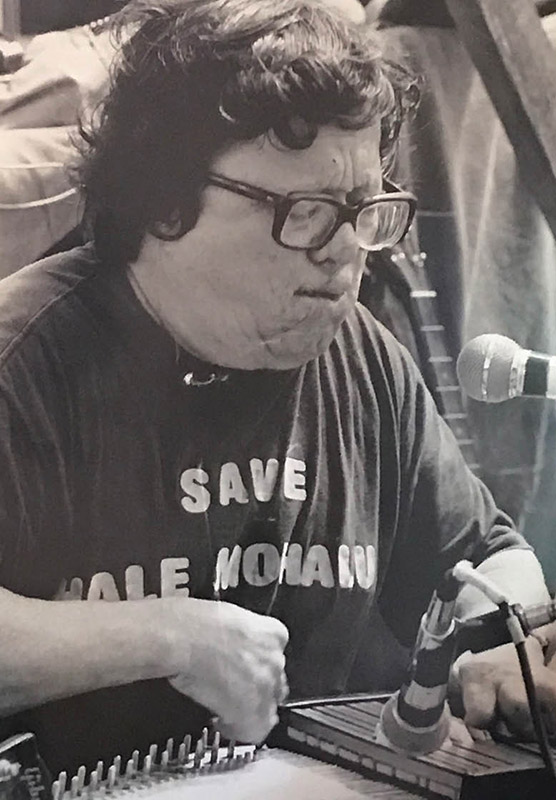
Other dates recognize the kamaaina of Kalaupapa who helped the early patients, the beginning of the protest by Kalaupapa residents to Save Hale Mohalu and the Protestant and Mormon communities of Kalaupapa.
To help the public better understand the dates behind Kalaupapa Month, Ka ‘Ohana has created various educational materials for January that can be found on its website —www.kalaupapaohana.org. These resources include a brochure about Kalaupapa Month that can be downloaded, essays about the significant dates in January and a webinar held earlier this month about how Kalaupapa Month came to be and why the dates stood out to ‘Ohana leaders.
In addition, Ka ‘Ohana will present a webinar about the life of the great Kalaupapa leader Bernard K. Punikai‘a on Jan. 24 from 10-11:30 a.m. To register for “Bernard K. Punikai‘a, Hawaiian Warrior,” sign up at info.kalaupapa@gmail.com.
All webinars by Ka ‘Ohana O Kalaupapa are free, but you must be registered to receive the link.
Because 2026 will mark noteworthy anniversaries of key historical incidents throughout the history, Ka ‘Ohana will be issuing essays on those events throughout the year.
For those living on Molokai or visiting the island, consider stopping by the Molokai Museum and Cultural Center in Kalae near the Kalaupapa lookout to view an exhibit of photographs of the people of Kalaupapa, family members and landscapes created by Ka ‘Ohana O Kalaupapa. Museum hours are Tuesday-Saturday, 10 a.m.-2 p.m.; admission is $5 ($1 for ages 5-18). Text (808) 349-2236 for more information.
Above: A webinar hosted by Ka ‘Ohana O Kalaupapa Jan. 24 will look at the life of Kalaupapa leader Bernard K. Punikai‘a. (Courtesy Ka ‘Ohana O Kalaupapa)