‘Mr. Einstein’ never stopped learning
By Valerie Monson
Special to the Herald
The education of Danny Hashimoto — perhaps one of the smartest men to ever live at Kalaupapa — began with comic books.
When Danny was sent to Kalaupapa in the spring of 1942, he was only 12, a frightened boy, feeling very much alone. Soon after he arrived, he became so sick with the physical effects of leprosy that he was admitted to the Kalaupapa Hospital.
To pass the time, he relied on the comic books his mother had given him.
Those comics would become Danny’s first library — and a launching pad to all things that led to higher learning. He would develop his own brilliant mind.
When Danny died at Kalaupapa on Aug. 20, 2025, just two months shy of his 96th birthday, he was, in his own way, a professor emeritus of just about anything.
He also had another distinction: Danny became the person to live the longest at Kalaupapa. He was there for more than 83 years. He never trusted government because of the many freedoms denied to him during his lifetime.
“He never forgot about what happened to him, but he found a kind of peace within himself,” said Kelly Castillo, a nurse at Kalaupapa who was immediately drawn to Danny when she began working at the care home in 2014. “After all that he went through, he found peace.”
Danny was born in Honolulu, the oldest child of Shisa and Tamayo Hashimoto.
In early 1939, for reasons Danny didn’t understand, his father “took me inside the Kress Store to buy me a flashlight,” he said in an interview many years ago.
It was as if Danny’s father wanted to make sure his son was never alone in the dark.
The next day, Danny was taken to Kalihi Hospital where he and his parents bid each other a teary goodbye. He had been diagnosed with leprosy, which meant he had to be isolated at Kalihi, a hospital established exclusively for people with the disease.
Little Danny was then assigned a single room where he would be alone with his flashlight. He was 9-1/2 years old.
“The first night I cried. Even breakfast time I cried.”
Six months after the bombing of nearby Pearl Harbor, Danny and 24 other youngsters at Kalihi were transferred to Kalaupapa.
With few opportunities for learning, Danny created his own curriculum. Those comic books led to sophisticated magazines, books, classical music, stamp collecting.
His intelligence — and independent spirit — were soon apparent to his new community.
‘‘We used to call him Mr. Einstein because he’s so smart,” the late Cathrine Puahala said in an interview. “We call him the walking dictionary. He’s self-educated you know.”
Danny became a skilled hunter and could handle a rifle with ease. He grew many of his own vegetables.
His first job was as a waiter at the McVeigh Home dining hall, serving meals for the residents (patients). He was taught “how to carry three plates on one arm at the same time,” he said.
Wasn’t that hard? “Nah. Just practice.”
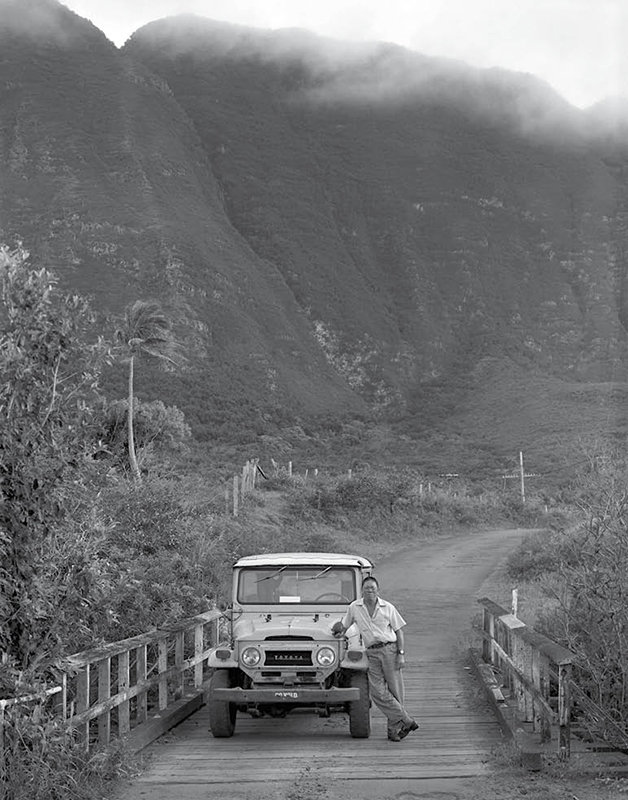
Danny eventually became the settlement’s longtime mail carrier and newspaper delivery man, jobs that seemed to fit in with his continual pursuit of knowledge.
A conversation with Danny — even when he was well into his 90s — could range from Winston Churchill to Native Americans in the Northwestern United States to Chuck Yeager breaking the sound barrier. There seemed to be no subject that could stump him.
“Sometimes I think I know too much,” he said with a sigh.
In 2000, while attending an exhibit about Kalaupapa on Maui, Danny was invited to dinner with guests that included W.S. Merwin, then the U.S. poet laureate and two-time recipient of the Pulitzer Prize for poetry. Danny and Merwin became fast friends and spent much of the evening talking together.
Whenever Danny planned a visit to Oahu, he knew where he was headed first.
“When I go Honolulu, I already know what I be buying at the bookstore,” he said. “50, 60 dollars maybe. That will lighten my pocket quite a bit.”
If he wasn’t reading, organizing his stamps or making kim chee from his garden bounty, Danny was probably listening to music: classical, opera, big band or Hawaiian — so long as the words were properly pronounced. He didn’t like rock ‘n’ roll “for nothing.”
Years ago, Danny stopped to talk story with a frequent visitor to Kalaupapa, handing her a newspaper left over from his regular delivery. As they chatted, the visitor noticed a story about the Grammy Awards being televised that night.
“So, Danny, are you going to watch the Grammys?” she asked, well aware that Danny didn’t care for that kind of music.
As always, Danny had his own unique answer.
“Why bother watching the Grammys?” he said as he headed out the door. “Better to listen to Maria Callas.”
Danny Hashimoto pauses for a photo next to his jeep that he drove while delivering Kalaupapa’s mail and newspapers. (Wayne Levin)