By Lisa Dahm
Hawaii Catholic Herald
When Father Ese’ese “Ace” Tui heard from a few families in his parish concerned about losing their Supplemental Nutrition Assistance Program, or SNAP, benefits from the government shutdown that began Oct. 1, he knew he had to act.
The pastor of Sacred Heart Church in Honolulu immediately engaged his parishioners and staff to help, and they quickly responded.
“It was like the Holy Spirit was prompting me,” Father Tui said.
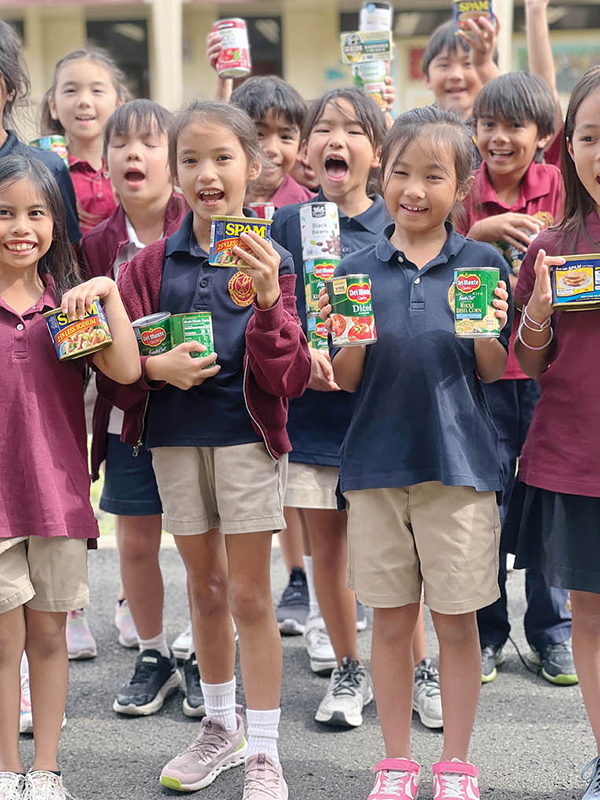
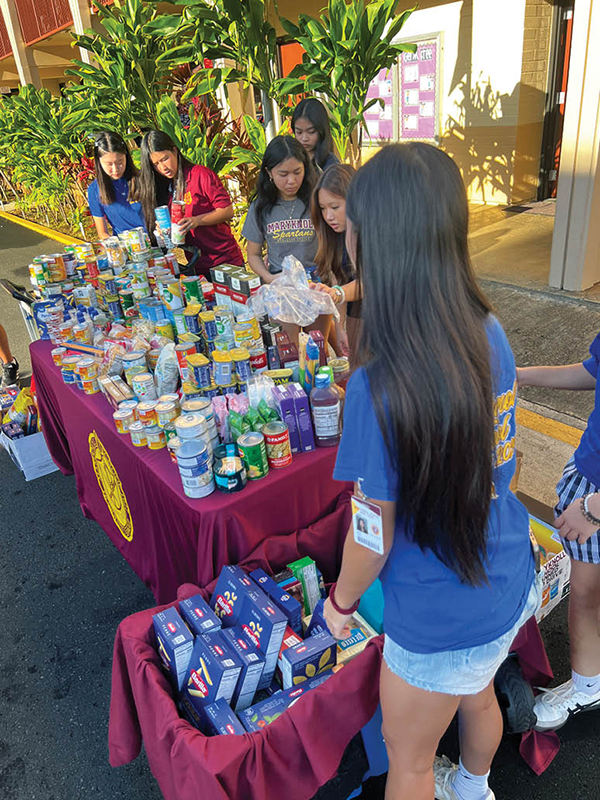
He also connected with Shana Tong, the president and head of Maryknoll School, and Maryknoll’s faculty and staff. Together, they worked with students and families to collect stacks of nonperishable food donations and gift cards.
On Nov. 1, the parish and school began praying for unity and peace to soften the hearts of leaders.
“Sometimes it is easy to donate, but I also want them to see we also have to pray,” Father Tui said. “Faith and works go together.”
The school’s hefty haul was blessed Nov. 7 and later delivered to the food pantry at St. Pius X Church, a couple miles from Sacred Heart Church.
The shutdown ended Nov. 12 after 43 days, the longest in U.S. history. The deal that was passed appropriates funding for SNAP through September 2026, as well as provides back pay to hundreds of thousands of federal workers who were either furloughed or forced to work without pay. It also restores thousands of federal jobs that were targeted during the shutdown.
Still, going nearly 1-1/2 months without a reliable source of income has taken a serious toll on families throughout the diocese. It has left many people already living paycheck-to-paycheck scrambling to feed their children and keep their homes running.
Throughout the diocese, other parishes have also been helping people affected by the government shutdown in addition to their regular food assistance.
Sacred Heart Church, Waianae
Regina Meleisea, coordinator of Sacred Heart’s food pantry program, said people start to line up in front of the parish at about 5 a.m. for its Tuesday distribution, which begins at 8 a.m.
Meleisea said the parish’s supplies are often depleted long before they get to the end of the line, but volunteers make the pantry’s offerings stretch as long as possible.
“Sometimes we run out of food by 9:30 — sometimes by 9 o’clock,” she said. “There are a lot of homeless on our coastline and at our beaches and our parks.”
Meleisea said that in the first week of November the parish saw more than 250 walk-in clients, and distribution numbers increased amid the government shutdown.
According to its monthly report, Sacred Heart’s food pantry is accessed most by older adults (62 years and above). In October, volunteers served 1,584 people — 447 children, 11 adults between ages 18 and 24, 542 adults between ages 21 and 62, and 584 seniors.
So far this year, Sacred Heart has already served 26,290 people.
“No matter what day of the week it is, as long as the parish gate is open, any person may come in and ask for food,” Meleisea said.
The food pantry also offers clothing, blankets, toiletries and other necessities to people who are unhoused. Meleisea said Sacred Heart also partners with St. Rita Church in Nanakuli and Our Lady of Keaau outreach center in Waianae, which operates a hot meal program.
“It’s been challenging, but we just have to go with the flow,” Meleisea said.
Co-Cathedral of St. Theresa, Honolulu
According to Julie Ratum, volunteer coordinator of the Co-Cathedral of St. Theresa’s food pantry, boxes are given out monthly through its Ohana Fresh Produce program in collaboration with Hawaii Foodbank. The number of households served now surpasses 300, she said.
“We really are the hands of God doing his work for him,” Ratum said.
Box contents include fresh produce, frozen meat, dairy, eggs, vegetables, fruits, canned goods, bread and snacks. The food is distributed on pallets, and volunteers sort and bag the items an hour before distribution.
Registration is managed through Eventbrite and food is distributed contact-free, with walk-through options for those without cars.
Ratum said that around 20 volunteers are required to maintain the program, including students from Damien Memorial School and St. Theresa School, making it a family activity.
“We have a great pool of volunteers,” Ratum said. “They are so dedicated.”
St. Theresa also distributes a monthly senior food box, serving between 220 to 250 seniors. The boxes contain protein, vegetables, juice, rice, milk and sometimes grain totaling 20 to 30 pounds. After the distribution, volunteers deliver food to homebound individuals.
The parish’s food pantry is open daily when the office is open, helping around a dozen to 20 people weekly with emergency services. Volunteers from the Social Ministry pack bags and use extras from the senior food box and Hawaii Foodbank distributions for additional needs.
The program has been active for more than 20 years and now includes serving a post-Thanksgiving turkey meal at Waikiki Health’s Keauhou Shelter in Honolulu.
St. Theresa also helps seniors with SNAP applications and living costs, providing funds for utilities and referring them to Catholic Charities Hawaii for other needs.
St. Damien of Molokai Church, Kaunakakai
On Molokai, St. Damien of Molokai Church distributes about 163 boxes to seniors on the third Thursday of the month through the Maui Food Bank. On Friday, anyone can line up for a box.
“We have the people come to us on that day between 1 and 3 to pick up the boxes and we have helpers here,” said Mary Anne Hill, a parishioner who volunteers with the food distribution. “Most have grandkids to help.”
Hill said bags are also assembled for people who come in for emergency food.
Since the shutdown, the parish has had more requests for assistance from people who are usually able to survive independently but have had to spend money they use for utilities on food.
Hill said that in her community, neighbors take care of one another. If someone sells vegetables and knows of someone in need, they will often give it to them, and people who fish will share their catch with neighbors.
“People are helping one another here,” she said.
St. Joseph Church, Hilo
Also on the third Thursday of the month, volunteers from St. Joseph Church serve hot meals, usually consisting of chili and cornbread or hot dogs, with volunteers providing dessert.
Bernie Rasay, coordinator of the hot meal program, said the food is cooked at a certified kitchen at Hope Services Hawaii and brought over. Attendance has grown from fewer than 100 to nearly 189 people.
Project Vision, a nonprofit organization that aims to increase access to essential health and human services, also attends the monthly event to provide mobile showers; volunteers offer visitors clothing, blankets and other items they may need.
Rasay, who has been a parishioner at St. Joseph for most of her life, said the program started as a peanut butter sandwich ministry and evolved to feed a hot meal to anyone who is hungry.
“Some of these people are people with homes, but they just they can’t make ends meet,” she said. “Feeding the hungry is for whoever is hungry.”
Rasay said that parishioners are generous with their time, talent and donations. Often, people who are unable to volunteer will donate rice, canned goods or paper products as a way to contribute.
“They do not have to come physically, but whenever we put (a call) in the parish bulletin, they always donate,” she said.
St. Theresa Church, Kihei
St. Theresa Church has a vibrant, daily hot meal program called Hale Kau Kau. It has a full-time coordinator and a chef, and is fueled by 150 volunteers who put in hundreds of hours a week.
Volunteers travel along six different routes to bring dinner every day to people who are homebound, and there are 70-80 people per night who receive meals at the parish’s hot meal distribution window.
“We have an awesome group here — I am thankful for them,” said director Shawn Michelle Wallen.
Each dinner consists of a main course, hot vegetables, bread, dessert and a drink.
“For some people, it is the only meal they have for the day,” Wallen said. “We see a variety of people, a lot of elderly and we’ve seen more families recently. We try to make people feel comfortable serving to anyone who comes.”
Wallen has been working for the program for four years. She said its numbers have remained consistent despite the shutdown, though the program was prepared for an increase if it stretched on.
“It means a lot to me to work in a job where we are helping people in the community and helping people in need,” she said.
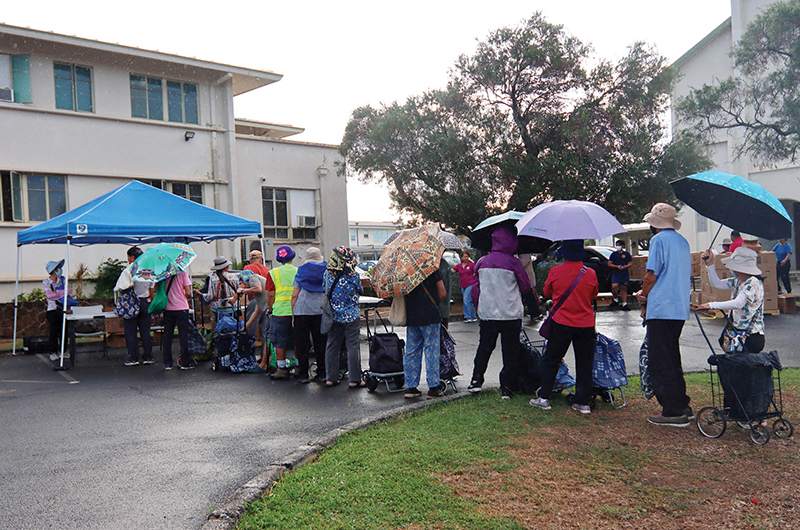
At top: Seniors braved the weather to line up early Nov. 8 to register for food box distribution at the Co-Cathedral of St. Theresa in Honolulu. (Courtesy Dann Ebina)
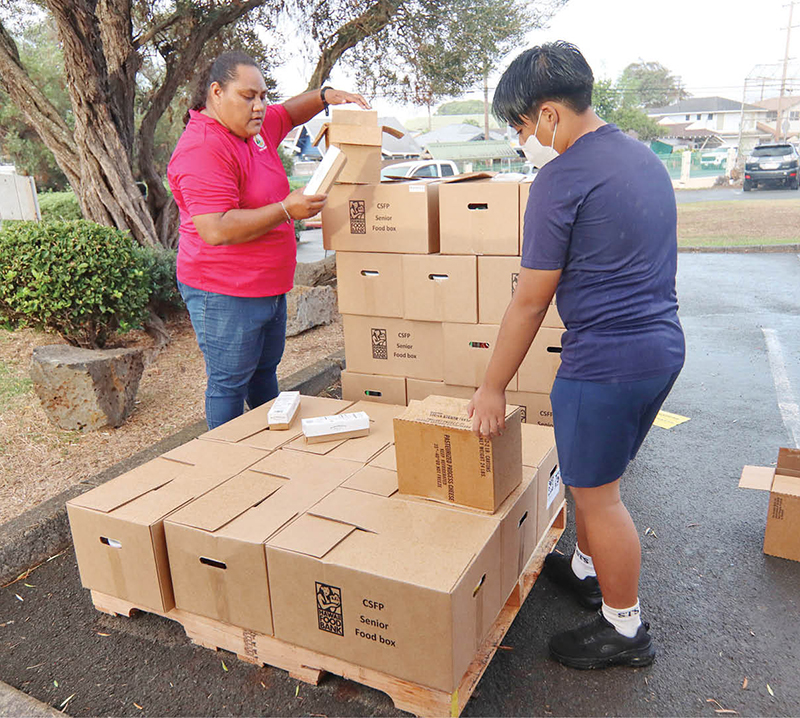
Above top: Vea Afu, left, a volunteer with the Co-Cathedral of St. Theresa’s Social Ministry, worked with a student from St. Theresa School Nov. 8 to organize senior food boxes from the Hawaii Foodbank during the parish’s monthly senior distribution. (Courtesy Dann Ebina)
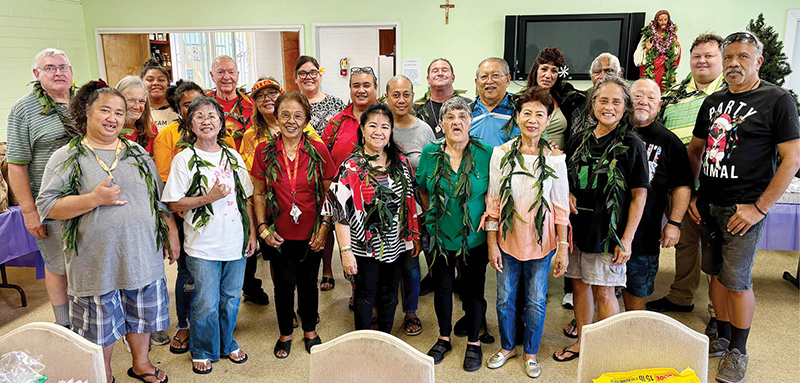
Above center: The hard-working volunteers who ensure visitors to the food pantry at Sacred Heart Church in Waianae are taken care of. (Courtesy Regina Meleisea)
Above: Maryknoll School first graders displayed some of the canned goods they helped collect. Maryknoll high school students looked over the items donated by the Maryknoll community and destined for the food pantry at St. Pius X Church nearby. (Photos courtesy Father Ese’ese “Ace” Tui)