Facing the future together
By Lisa Dahm
Hawaii Catholic Herald
Petra Ranches’ first action when working with new clients at St. Francis Hospice is to meet them and personalize their care.
Whether they need relief from physical, emotional or spiritual symptoms, the nurse practitioner’s goal with hospice care is to first understand the patients’ immediate needs, such as pain management, then help them reach any future goals.
“Each patient is different, so it is important to start with them,” she said.
Doctors recommend hospice care when they’ve explored all possible medical options or a terminal patient would like to stop treatment. Hospice care can take place in a patient’s home, at the St. Francis Healthcare System of Hawaii’s 12-bed inpatient facility in Nuuanu, or in a nursing or foster home.
“That’s what hospice is,” Ranches said. “It’s that companion or guide at the end of life when you’re dealing with serious illness — for patients and their families to have somebody to talk to, to lean on and to ask those important questions and then to care for those patients.”
Long legacy of care
In the late 1800s, Mother Marianne Cope and the Sisters of St. Francis arrived in Hawaii from Syracuse, New York, and dedicated their lives to serving the sick and those in need of all faiths. They laid the groundwork for St. Francis Healthcare System of Hawaii and its wide network of services.
As the first organization to bring hospice care to Hawaii, St. Francis continues to make patients’ comfort and support for families its top priority.
“St. Francis Healthcare System of Hawaii is rooted in the heart of our community, caring for island families for nearly 100 years,” said Kathy Morimoto, president and CEO. “Compassion is our calling, and we’re focused on honoring our legacy, values and commitment to serving kupuna through ohana-centered hospice and supportive services.”
St. Francis Healthcare System of Hawaii has 162 employees, with 96 of them working in the hospice for both inpatient and at-home care. St. Francis Hospice serves nearly 1,200 patients annually with an interdisciplinary support team of doctors, nurses, social workers, chaplains and access managers.
One important aspect of the organization is its volunteer program. There are about 130 volunteers, with more than 75 focused on hospice care.
According to quality manager Chad Benson, volunteers help in their inpatient unit by visiting patients and families and welcoming newcomers.
“There is a thing that we call silent presence,” Benson said. “We teach people how to become comfortable just sitting with someone and not have to actually be doing something or speaking.”
Importance of family
Once a patient is referred to hospice care, a hospice team liaison meets with the patient and his or her family.
“We like to have the conversation with all the members of the patient’s circle of care, including daughters, sons, spouses, grandchildren,” said Julie Young, an access manager with St. Francis Hospice who got her start with the organization as a volunteer in college.
The hospice team also examines family dynamics, looking to see what services the family is going to need, such as bereavement support or clinical education.
Following a patient’s death, the St. Francis bereavement department typically stays with the person’s families for about a year.
“There’s a reason — it’s hard,” Ranches said. “It’s that family’s first birthday, Christmas or holiday without that person there. So, we continue to be those guides.”
St. Francis offers a community support group for family members, whether or not the patient received hospice services. The group offers grief coping skills as well as support and resources.
Ranches said the health care industry now recognizes that taking care of family after death is important for healing. Grief, she said, is different for every person and can be complex, which is why the bereavement department stays connected to family members.
Honoring loved ones’ lives
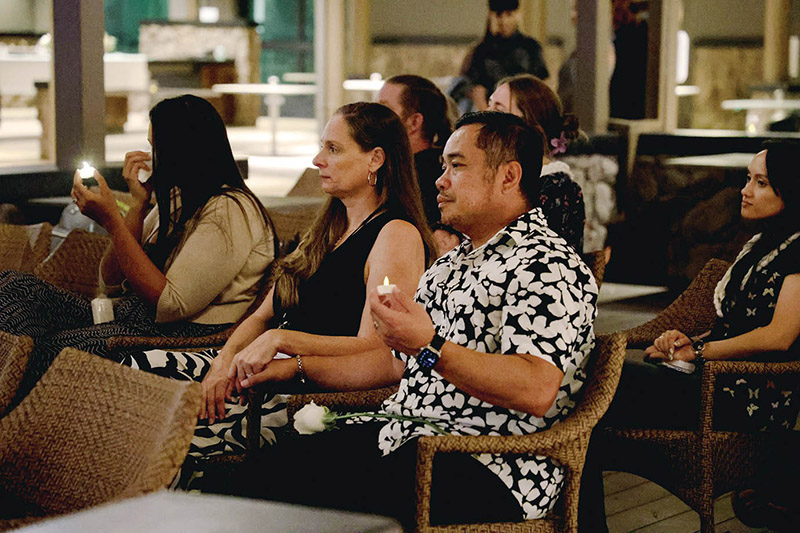
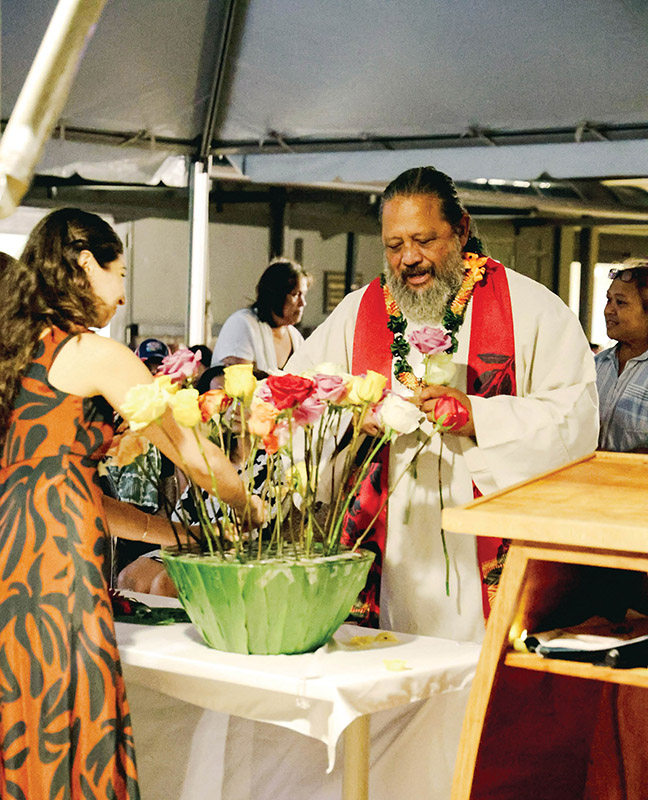
Every year, St. Francis’ bereavement program honors patients who have died in an interfaith service for families called A Rose for Remembrance, held this year on Oct. 24 in the St. Francis Kupuna Village Courtyard in Liliha.
As the sun set on the outdoor lanai, family members honored their loved ones who have passed by announcing their names and placing a memorial rose in a bouquet.
The event is just one of the many ways St. Francis Hospice continues its relationship with families. Ranches said that knowing their family will receive continuing support often gives patients peace of mind — that they are part of a caring community.
“For as much as I give my patients, they give back to me,” Ranches said. “It’s an honor just being present at that journey. … It reminds me that deep down, we’re all very similar.”
On Dec. 5, St. Francis Hospice will hold its annual Light Up a Memory ceremony at the St. Francis Kupuna Village Courtyard. Proceeds from the event, which honors the lives of loved ones, will support the hospice.
For more information, to volunteer or to donate, call (808) 547-6500 or visit stfrancishawaii.org.
Above top: Petra and Don Ranches attended the Oct. 24 A Rose for Remembrance service at St. Francis Healthcare System of Hawaii’s St. Francis Kupuna Courtyard in Liliha. Petra Ranches, a nurse practitioner with St. Francis Hospice, said “it’s an honor” to be with patients on their end-of-life journey. Above bottom: Kahu Kaleo Patterson, vicar of St. Stephen Episcopal Church in Wahiawa and president of the Pacific Justice and Reconciliation Center, placed a rose in a bouquet in memory of a loved one Oct. 24 during St. Francis Hospice’s A Rose for Remembrance ceremony. (Photos by Lisa Dahm / Hawaii Catholic Herald)